
Finding the perfect foundation should be simple. You pick the shade, apply it, look radiant, and go live your life.
In reality? Your foundation can separate, cling to dry patches, slide off your T-zone, oxidize, pill, look cakey, or somehow make your skin look both oily and dehydrated at the same time. A true talent, honestly.
One of the biggest reasons foundations do not behave is that we often focus only on coverage and shade, while ignoring the base of the formula.
Is your foundation water-based? Silicone-based? Oil-based? And more importantly, does it actually match your skin type, your primer, and the finish you want?
Let’s decode the difference properly, so your foundation stops acting like it has personal issues.
A water-based foundation is usually built around water or water-like hydrating ingredients.
These formulas often feel light, breathable, and flexible on the skin. They are the foundations that give you that “my skin but better” effect rather than a full face of makeup with a press tour schedule.
Water-based foundation tends to spread smoothly and sink into the skin without feeling greasy or heavy. It often gives a natural, fresh, satin or radiant finish. Because water evaporates after application, the pigments and film-forming ingredients are left behind to even out the complexion.
This type of foundation is especially good if you hate feeling makeup on your face. If you want your skin to look polished but still alive, water-based formulas are your girl.
Water-based foundation is usually best for:

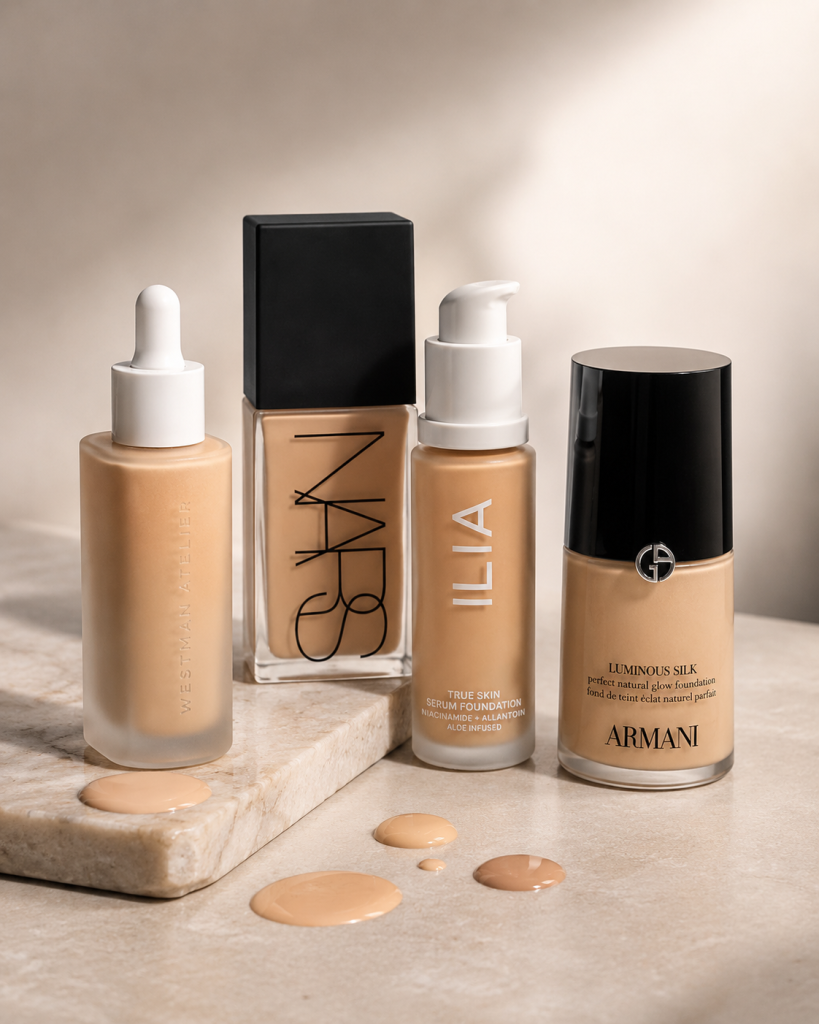
NARS Light Reflecting Advanced Skincare Foundation is a good example of a water-led, skincare-inspired foundation. It has water listed first and is designed for medium buildable coverage with a natural luminous finish. It also includes skincare ingredients such as biomimetic oat, Japanese lilyturf, cacao peptides and milk thistle.
ILIA True Skin Serum Foundation is another good example of a lightweight, skin-focused foundation. It highlights niacinamide, allantoin and aloe to smooth, soothe and hydrate with a featherweight feel, while giving medium coverage and a natural finish.
MAKE UP FOR EVER HD Skin Foundation is a water-first formula with a long-wearing, waterproof, sweat-resistant finish. It is a good reminder that “water-based” does not always mean sheer or delicate — some water-led formulas are made to last.
A silicone-based foundation contains silicones high in the formula. Silicones are used in makeup because they create slip, smoothness, flexibility, and a soft-focus effect. This is why many long-wear and matte foundations are silicone-based or silicone-rich.
In beauty terms, silicone is the reason some foundations glide over pores like they did not just see them.
Silicone-based foundation forms a flexible film over the skin. This helps blur texture, smooth the look of pores, control shine, and improve wear time. It often feels silky or velvety and can make foundation look more polished in photos.
This type of formula is especially popular in professional makeup because it tends to last well and create a more perfected canvas.
Silicone-based foundation is usually best for:
If your foundation always disappears by lunch, a silicone-rich formula may be what your routine is missing.
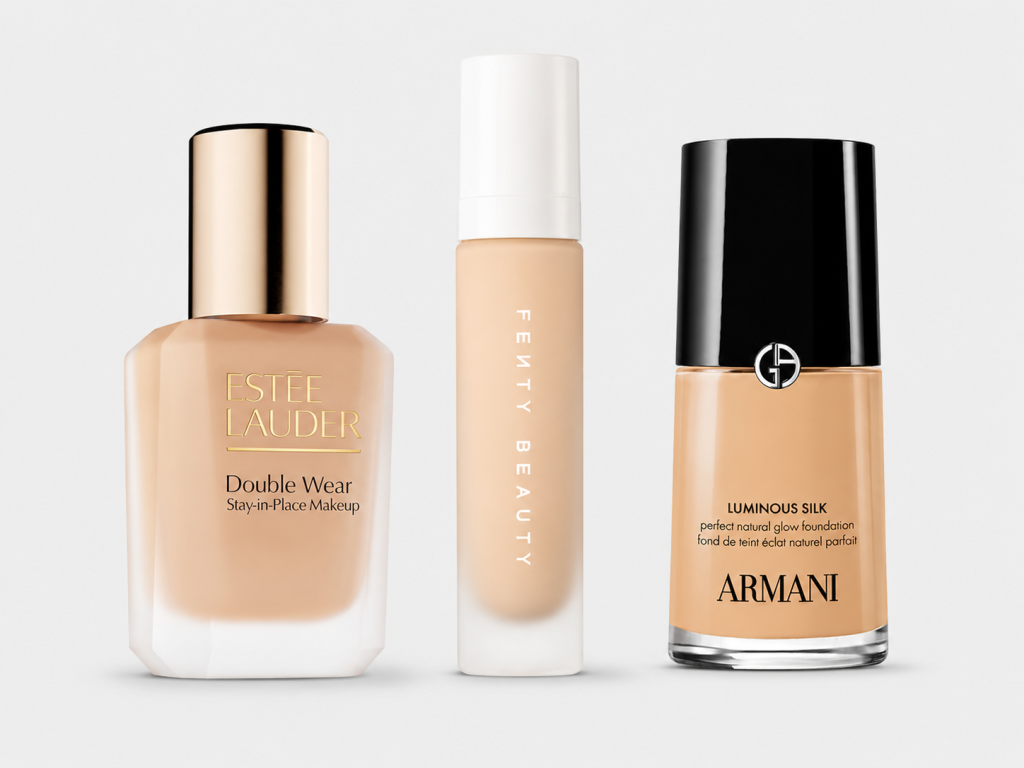
Estée Lauder Double Wear Stay-in-Place Foundation is officially described as water-based and oil-free, but the formula also contains silicones such as cyclopentasiloxane and dimethicone-type ingredients, giving it that long-wear, transfer-resistant, sweat- and humidity-resistant performance.
Fenty Beauty Pro Filt’r Soft Matte Longwear Foundation is a silicone-rich soft matte foundation with water followed by dimethicone and PEG-10 dimethicone in the ingredient list. It is made for long wear, shine control, sweat and humidity resistance, and a smooth soft-matte finish.
Giorgio Armani Luminous Silk Foundation is a classic example of a water-and-silicone hybrid foundation, with water and cyclopentasiloxane high in the formula. It is known for that smooth, luminous, polished finish that still looks skin-like.
An oil-based foundation or oil-rich foundation uses oils, emollients, or ingredients like squalane to give the formula richness, glide, and glow. These formulas are often more nourishing and comfortable, especially for skin that feels dry, tight, or dull.
This is the foundation category for people whose skin wants comfort, not punishment.
Oil-based formulas use oils and emollients to soften the skin, create slip, and add radiance. Instead of setting down into a dry matte finish, they usually leave the skin looking dewy, supple, and moisturized.
They tend to move more with the skin, which can be beautiful on dry or mature skin. The finish often looks more “real skin” than flat matte.
Oil-based foundation is usually best for:
If your foundation always looks patchy, dry, or too visible, an oil-rich formula can make a huge difference.
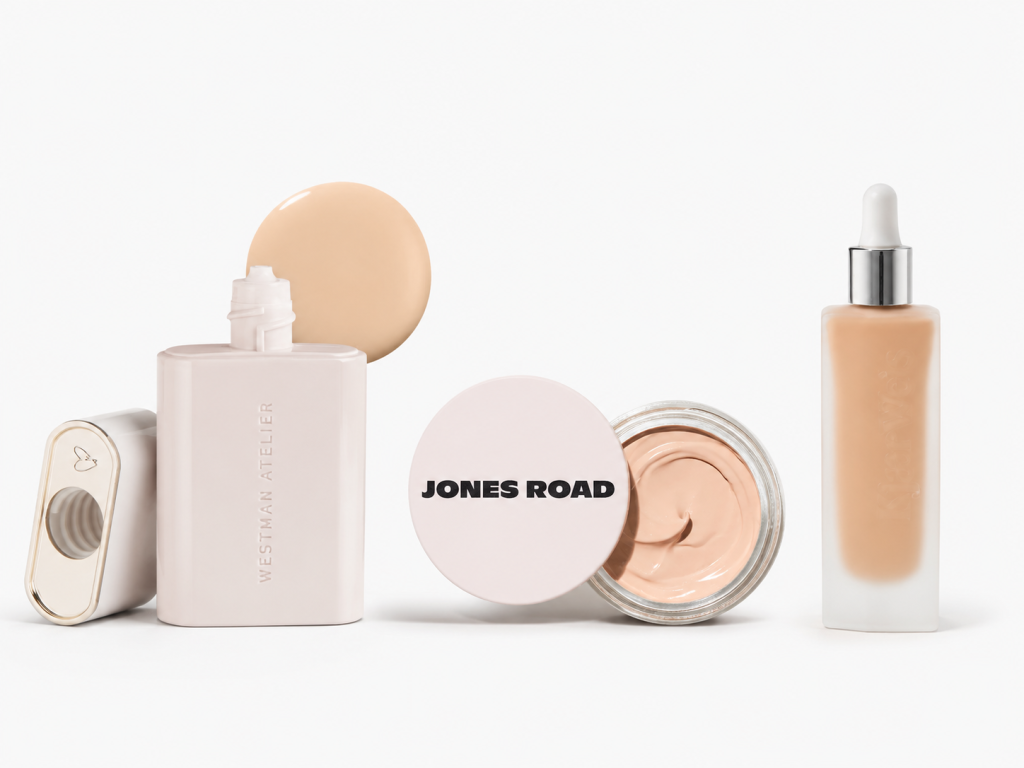
Westman Atelier Vital Skincare Complexion Drops is a strong oil-rich example, with squalane listed first, followed by water, avocado oil and pomegranate seed oil. It is designed as complexion-boosting drops with breathable coverage, radiance and skincare benefits.
Jones Road What The Foundation is described as an ultra-nourishing foundation with light-to-medium buildable coverage that blends into the skin for an even, fresh complexion. It has that balmy, skin-comforting style that works best for people who want glow and moisture rather than a matte set-down.
Kjaer Weis Invisible Touch Liquid Foundation is a nourishing, skin-focused formula highlighting certified-organic chamomile water, hyaluronic acid and radiance-enhancing ingredients, with emollients and oils in the formula family. It is a good choice if you like a more natural, luminous finish.
If you have oily skin, start with silicone-based or oil-free water-based foundations. Look for words like matte, soft matte, long-wear, transfer-resistant, humidity-resistant or oil-free.
If you have dry skin, look for water-based hydrating foundations or oil-rich formulas. You want ingredients like squalane, hyaluronic acid, glycerin, aloe, oils or nourishing emollients. Avoid overly matte formulas unless you prep like your life depends on it.
If you have combination skin, congratulations, your face enjoys complexity. Try a water-based or silicone-based foundation and customize with primer: mattifying on the T-zone, hydrating on the cheeks.
If you have mature skin, water-based hydrating formulas and oil-rich foundations can look more flattering because they move with the skin and do not emphasize texture as much as dry matte formulas can.
If you have acne-prone skin, look for non-comedogenic formulas and avoid anything too heavy or greasy. Silicone-based foundations can actually work beautifully if the formula is non-comedogenic and your cleansing routine is solid.
If you have textured skin or visible pores, silicone-based foundations can be your best friend because they create that smoother, blurred effect. Just do not overapply. Too much foundation over texture is like putting a spotlight on the situation.
This is where many makeup routines go to die.
As a general rule, pair like with like:
Water-based foundation + water-based primer
Silicone-based foundation + silicone-based primer
Oil-based foundation + rich moisturizer or oil-compatible primer
When the base of your primer and foundation clash, your makeup can pill, separate or slide around. A silicone-heavy primer under a very watery foundation may not grip properly.
A rich oil underneath a matte long-wear foundation can make it break apart. Basically, your products start fighting, and your face becomes the battlefield.
A simple trick: look at the first five ingredients. If both products have similar ingredients near the top, they are more likely to play nicely together.
And remember: the best foundation is not the one everyone on TikTok is screaming about. It is the one that works with your actual skin, your actual routine, and your actual life.
Revolutionary, I know.